
Data Structures and Algorithms Training in Hyderabad
Build a strong foundation in programming with in-depth knowledge of data structures and algorithms. Learn to solve complex problems efficiently, enhance your logical thinking, and prepare for top tech interviews with hands-on coding practice and real-world problem sets.
Explore MoreJoin us Today
Fill in the details to take one step closer to your goal
Average salary for software engineers with strong DSA skills
Source : Geeksforgeeks
Job listings requiring DSA proficiency and algorithmic thinking
Source : Linkedin
Annual growth in demand for problem-solving roles
Source : Naukri.com
Industry-Oriented DSA Training at DIGIT institute
Begin your programming journey with the DSA course at DIGIT institute. Learn essential problem-solving techniques and master the core concepts of data structures and algorithms. Understand arrays, linked lists, trees, graphs, sorting, searching, recursion, and more.
- Practice Algorithms including Sorting, Searching & Graphs
Our expert instructors guide you through step-by-step explanations, hands-on coding sessions, and personalized mentorship. This course prepares you for competitive programming and technical interviews with mock tests, coding challenges, and real-world scenarios.
- Prepare for Tech Interviews with DSA-focused Mock Tests
Your DSA Learning Journey
Unlock your potential in DSA with DIGIT institute's professionally curated curriculum. Join us and embark on a transformative journey to mastery in DSA practices and tools.
DSA
The scenario where an algorithm executes with the least time and resources.
The expected performance based on the average input conditions.
The maximum time or steps an algorithm takes in the worst input scenario.
Mathematical representation to describe time and space complexity.
Measures how the execution time increases with input size.
Measures the additional memory required as the input size grows.
Sum of Natural Number
Count Digit
Palindrome
Factorial
GCD OR HCF and LCM of Two number
Check for Prime Factorization
Divisor of a Number
Other Related Problems
Calculating Average, Mean, and Finding Largest, Second Largest Elements
Slicing, Reversing, Rotating Lists, and Separating Even/Odd Elements
Removing Duplicates from a Sorted List and Finding Leaders
Finding Odd Numbers, Frequencies in a Sorted Array, and Related Problems
String Handling and Manipulations
Performing String Operations like Slicing, Concatenation, and More
Reversing a String
Checking for Palindromes and Rotated Strings
Identifying the Leftmost Repeating Character
Solving Various String-related Problems
Introduction to Recursion Concept, Base Case, and Recursive Flow
Recursive Number Printing
Recursive Sum Calculation
Recursive Palindrome Check
Other Recursive Problems and Applications
Implementing Linear Search for Finding Elements in a List
Implementing Binary Search for Faster Element Searching
Counting the Occurrences of an Element in a List
Performing Recursive Binary Search for Element Location
Bubble Sort Repeatedly swap adjacent elements if they are in the wrong order
Selection Sort Find the minimum element and swap it with the first unsorted element
Merge Sort Divide the list into halves, recursively sort them, and merge
Quick Sort Pick a pivot, partition the list, and recursively sort the sublists
Implementing a Stack using Arrays for LIFO Operations
Implementing a Queue using Arrays for FIFO Operations
Implementing a Min Stack to Track Minimum Element Efficiently
Solving Other Stack and Queue-related Problems
Introduction to Linked Lists and Their Traversal Operations
Inserting a Node at the Beginning, End, and a Given Position
Deleting a Node from the Beginning, End, and a Given Position
Reversing a Linked List, Introduction to Doubly Linked Lists, and Related Problems
Introduction to Trees, Binary Trees, and Binary Search Trees
Performing Inorder, Preorder, Postorder, and Level Order Traversals
Finding the Height, Diameter, and Solving Other Tree-related Problems
Graph Concepts Nodes (Vertices), Edges, Directed/Undirected, Weighted/Unweighted
Representations: Adjacency List and Matrix
BFS (Breadth-First Search): Level-wise traversal using Queue
DFS (Depth-First Search): Deep traversal using Recursion or Stack
Counting Connected Components in an Undirected Graph
Solving Graph-based Problems
DSA
The scenario where an algorithm executes with the least time and resources.
The expected performance based on the average input conditions.
The maximum time or steps an algorithm takes in the worst input scenario.
Mathematical representation to describe time and space complexity.
Measures how the execution time increases with input size.
Measures the additional memory required as the input size grows.
Sum of Natural Number
Count Digit
Palindrome
Factorial
GCD OR HCF and LCM of Two number
Check for Prime Factorization
Divisor of a Number
Other Related Problems
Calculating Average, Mean, and Finding Largest, Second Largest Elements
Slicing, Reversing, Rotating Lists, and Separating Even/Odd Elements
Removing Duplicates from a Sorted List and Finding Leaders
Finding Odd Numbers, Frequencies in a Sorted Array, and Related Problems
String Handling and Manipulations
Performing String Operations like Slicing, Concatenation, and More
Reversing a String
Checking for Palindromes and Rotated Strings
Identifying the Leftmost Repeating Character
Solving Various String-related Problems
Introduction to Recursion Concept, Base Case, and Recursive Flow
Recursive Number Printing
Recursive Sum Calculation
Recursive Palindrome Check
Other Recursive Problems and Applications
Implementing Linear Search for Finding Elements in a List
Implementing Binary Search for Faster Element Searching
Counting the Occurrences of an Element in a List
Performing Recursive Binary Search for Element Location
Bubble Sort Repeatedly swap adjacent elements if they are in the wrong order
Selection Sort Find the minimum element and swap it with the first unsorted element
Merge Sort Divide the list into halves, recursively sort them, and merge
Quick Sort Pick a pivot, partition the list, and recursively sort the sublists
Implementing a Stack using Arrays for LIFO Operations
Implementing a Queue using Arrays for FIFO Operations
Implementing a Min Stack to Track Minimum Element Efficiently
Solving Other Stack and Queue-related Problems
Introduction to Linked Lists and Their Traversal Operations
Inserting a Node at the Beginning, End, and a Given Position
Deleting a Node from the Beginning, End, and a Given Position
Reversing a Linked List, Introduction to Doubly Linked Lists, and Related Problems
Introduction to Trees, Binary Trees, and Binary Search Trees
Performing Inorder, Preorder, Postorder, and Level Order Traversals
Finding the Height, Diameter, and Solving Other Tree-related Problems
Graph Concepts Nodes (Vertices), Edges, Directed/Undirected, Weighted/Unweighted
Representations: Adjacency List and Matrix
BFS (Breadth-First Search): Level-wise traversal using Queue
DFS (Depth-First Search): Deep traversal using Recursion or Stack
Counting Connected Components in an Undirected Graph
Solving Graph-based Problems
Exploring Course Essentials
Embark on a journey to understand the critical elements of our course.

Learn Online
Embark on a learning journey with our diverse courses, available online.

professional Instructors
Begin your learning journey with our accomplished instructors, professionals in their fields.

1:1 Mentorship
Experience personalized growth with our 1:1 mentorship, where dedicated mentors guide you toward success.

Low Student - Teacher Ratio
Benefit from personalized guidance and a supportive learning environment with our small class sizes.

Flexible Learning Options
Enhance your education with flexible choices that fit your schedule and preferences.

Hands-On Projects
Engage in practical, real-world projects to reinforce key skills and essential concepts.

Comprehensive Curriculum
Follow a meticulously designed curriculum that takes you from core fundamentals through advanced, real‑world applications.

Regular Assessments
Keep your learning on track with periodic quizzes and projects that reinforce concepts and measure your progress.

Career Support
Get expert career advice, resume building, and interview prep to launch your dream job.
Track Your Progress Toward Enrollment

1. Registration
Register online, provide details, help admissions understand your career goals.

2. Test
Submit application, then an assessment ensures eligibility and program aptitude.

3. Offer Applicable
After review, eligible candidates get scholarship offers and confirmation email.

4. Fee Payment
Review your admission offer, promptly pay fee to confirm enrollment.
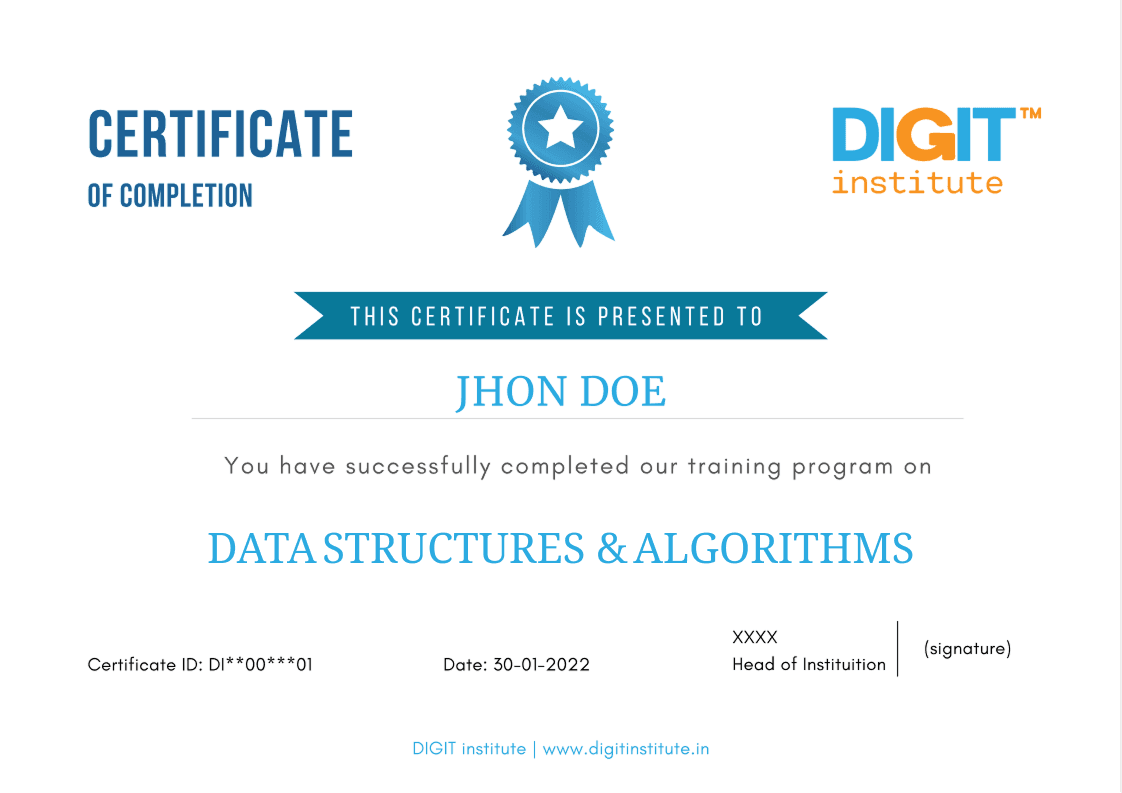
Advance Your Career with Our DSA Certification

Industry Recognition
Our certifications are well-regarded in the software industry, providing valuable opportunities for career advancement

Skill Validation
Our certifications validate your skills through practical application, equipping you for the workforce and demonstrating your expertise to employers.

Career Advancement
Achieve new heights in your professional journey with our certifications.
Shared Experiences from Our Students
Join Our Upcoming Batches
Secure your spot in the next batch. Limited seats available. Enroll now and start your learning journey with expert-led live training.
Contact for Next Batches